We use cookies to make your experience better. To comply with the new e-Privacy directive, we need to ask for your consent to set the cookies. Learn more.

Creature Feature

Yellow Fever Mosquito
The yellow fever mosquito (Aedes aegypti) originated in Africa, where it evolved from an ancestor that still exists there today. Its ancestor prefers to lay eggs in natural tree holes and to feed on non-human animals. At some point, the yellow fever mosquito became domesticated, breeding in artificial containers close to humans and preferring human hosts. This domestication allowed their introduction into the New World via European ships leaving West Africa with slaves and containers of drinking water also holding immature yellow fever mosquitoes.
Yellow fever existed in Africa before the Europeans arrived and followed them into the New World in the 1600s. Epidemics killed thousands of people through the early 1900s until it was discovered that the yellow fever mosquito was the disease vector. Afterwards, mosquito eradication campaigns and a vaccine developed in the 1930s virtually eliminated yellow fever from the United States. The yellow fever mosquito has been introduced into parts of Canada but has not established populations.
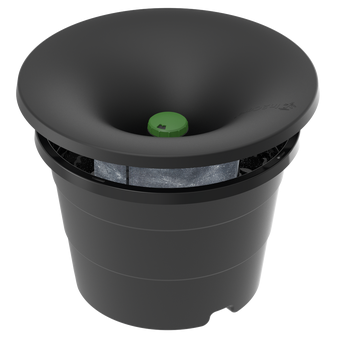
Like yellow fever, dengue, chikungunya, and Zika viruses originated in Africa and circulated in non-human animals before adapting to human transmission. Once adapted, they quickly spread and caused epidemics in other parts of the world. Unlike yellow fever, vaccines for these diseases have yet to be developed. The yellow fever mosquito is the most efficient vector of dengue, chikungunya, and Zika viruses because it prefers to breed near and feed on humans. Providing breeding sites with traps treated with both a larvicide and an adulticide can reduce the mosquito population on a property. To quickly knock down biting adults, apply a liquid residual insecticide with a backpack mist blower to adult mosquito resting sites under shady and secluded areas such as foliage, eaves, and decks.
Featured Products
Featured ProTraining Courses

Mosquito Biology and the Diseases They Vector
Course Type: Technical
Time: 60 Minutes
The most important mosquito disease vectors in the United States belong to the genera Aedes, Culex, and Anopheles. Diseases transmitted by these mosquitoes cycle differently in human populations. After completing this course, you should be able to understand the basic mosquito life cycle and types of breeding sites and identify adults of these mosquito species and the diseases they vector.